
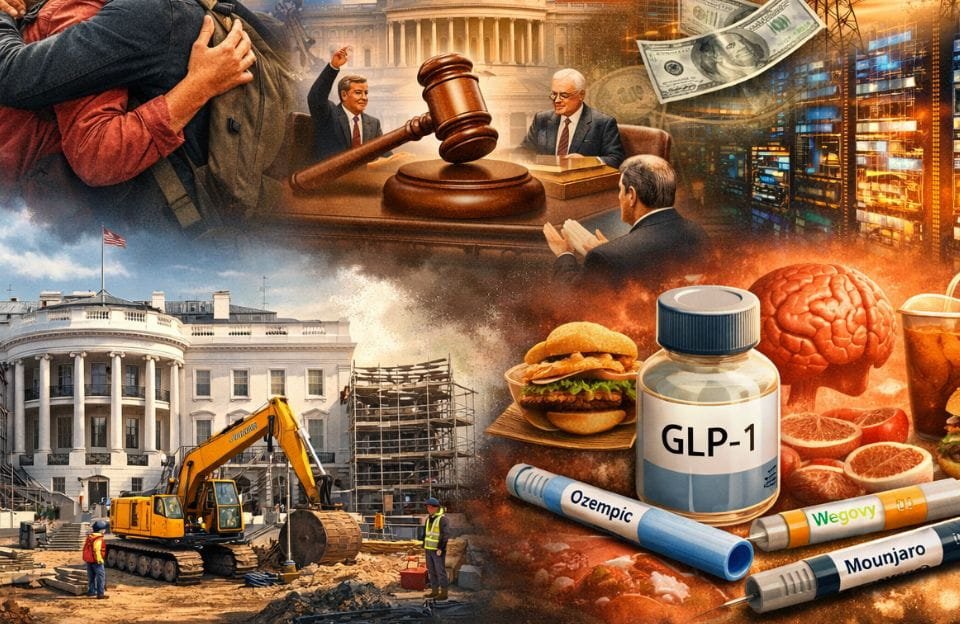
More than 17,500 American citizens have been brought back to the United States from the Middle East since the conflict with Iran began six days ago, according to the U.S. Department of State. Emotional reunions have been witnessed at airports worldwide as families have finally been reunited after days of uncertainty. Meanwhile, major developments have been reported regarding travel disruptions, war powers debates, electricity costs, White House renovation plans, and new research on weight loss drugs.
1. Travel Disruptions
Travel disruptions across the Middle East are gradually being eased as airlines schedule alternative routes and governments organize charter flights for stranded passengers. The first U.S.-facilitated charter flight carrying American citizens was launched on Wednesday, and additional flights are expected in the coming days.
Thousands of travelers have also been transported on commercial flights through major transit hubs in the United Arab Emirates. However, the situation in the region continues to be monitored closely as the conflict widens. Reports indicate that an Iranian warship was sunk by U.S. forces near the coast of Sri Lanka, while an Iranian missile headed toward Turkey was intercepted by NATO defense systems.
2. War Powers Debate
A war powers resolution was rejected by Republican senators on Wednesday. The resolution would have required the administration of Donald Trump to obtain approval from Congress before continuing military action against Iran.
The vote was finalized at 53–47, with Rand Paul, a Republican senator from Kentucky, supporting Democrats in advancing the resolution. Meanwhile, John Fetterman, a Democratic senator from Pennsylvania, voted alongside Republicans to oppose it. Further discussion on the issue is expected to be held in the House of Representatives, where a vote has been scheduled for today.
3. Rising Electricity Costs
A voluntary pledge aimed at controlling electricity prices was introduced by President Donald Trump on Wednesday in partnership with several major technology companies. The agreement has been signed by companies including Google, Microsoft, Meta Platforms, Oracle, xAI, OpenAI and Amazon.
The initiative has been presented as a measure to protect consumers from rising utility costs linked to the rapid expansion of artificial intelligence infrastructure. Electricity rates in the United States have already been increased for several reasons, including the growing demand from new AI data centers.
Significant price increases have been experienced by residents in Mid-Atlantic states such as New Jersey, Pennsylvania, Maryland and Virginia, where one of the world’s largest concentrations of data centers is located in northern Virginia.
4. White House Renovation
A large ballroom project connected to the White House is expected to receive final approval from the National Capital Planning Commission. The project has faced widespread opposition, with more than 32,000 public comments submitted, most of which have expressed concerns about the construction.
The proposal was accelerated after the East Wing was demolished last October as part of the renovation plan promoted by President Donald Trump. If the project is approved by the commission, further attempts to stop construction would likely require legal intervention through the courts.
5. Weight Loss Drugs and Addiction Research
New evidence suggests that a group of medications known as GLP-1 drugs may also help treat addiction. These medications include Ozempic, Wegovy, Mounjaro and Zepbound.
The drugs are currently approved for the treatment of diabetes and obesity and are already being used by millions of Americans. By affecting both the digestive system and the brain, appetite control and insulin regulation are improved, which helps reduce cravings.
A newly published study has shown that individuals using GLP-1 medications were less likely to develop substance-use disorders or experience severe outcomes such as hospitalization or overdose. Researchers believe that these findings could open the door to new medical uses for these widely prescribed treatments.