By Maya Patel, Senior News Editor – Dubai
April 9 2026
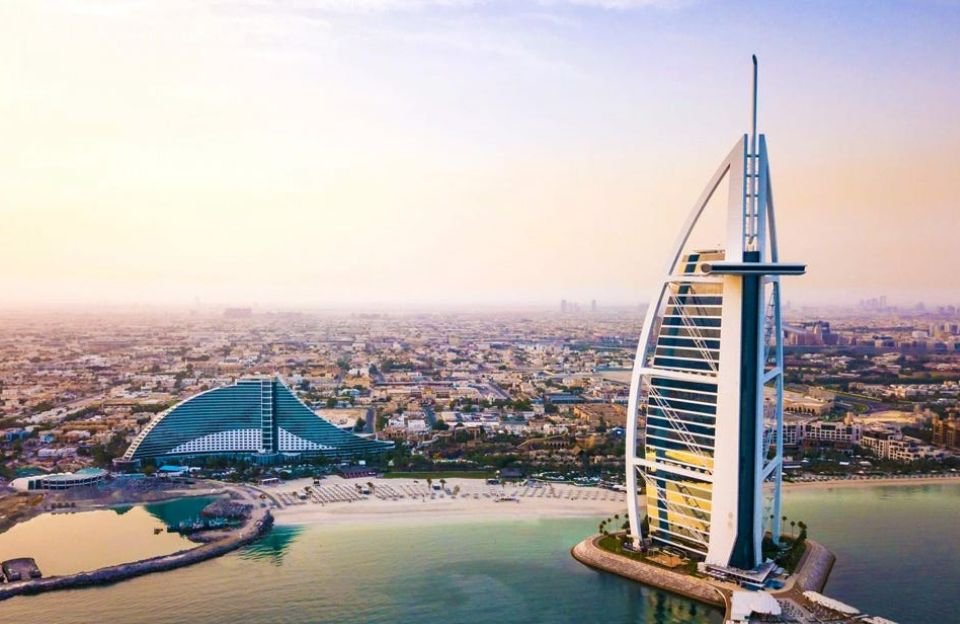
Dubai’s world‑famous Burj Al Arab, the sail‑shaped icon that has been the benchmark for opulent hospitality since its 1999 opening, will close its gates for the first time in its 27‑year history. A consortium of international investors, headed by the hotel’s parent company, Dubai Tourism and Recreation Development (DTRD) in partnership with the International Hospitality Restoration Group (IHRG), announced on Monday that the hotel will be out of operation for 18 months—from September 2026 to March 2028—in order to undergo a wave of seismic and‑critical retrofits, a full‑scale façade refurbishment and a comprehensive sustainability upgrade that will bring the property into line with UAE’s latest building codes and World Bank‑backed green‑tourism standards.
- Why a closure, and why now?
The decision comes after a rigorous structural‑integrity audit conducted by a joint commission of the UAE Ministry of Tourism, the Dubai Municipality, and an international engineering consortium led by Kanzler & Baecker Consulting. The audit identified several high‑priority areas requiring immediate attention:
Issue Scope Action
Seismic retrofitting The hotel’s core supports and load‑bearing columns were designed to the 1990‑s code, which does not meet the 2021 seismic design envelope for the UAE’s Gulf‑belt region. New reinforced concrete cores and shear‑wall updates to the central spine.
Façade & Sustainability 95 % of the glass façade is “single‑handler” and suffers from age‑related degradation. In addition, the hotel’s existing HVAC system is 18 years old and does not meet ISO 14001 emissions standards. Installation of a “solar‑cell‑integrated façade” (17 MW capacity) and a new closed‑loop cooling system.
Interior Revitalisation The original 2003 interior scheme—known as the “gold‑on‑gold” ostentation—has lost its punch and does not provide the “triple‑level” luxury the global market now demands. A dozen curated suites upgraded with smart‑home integration (IoT LED control, room‑temperature AI), a fully‑digitised concierge service, and a “Momento” collection of 2020‑era art by native Emirati artists.
Safety & Accessibility The hotel’s fire‑rescue and earthquake‑emergency systems are outdated and the 2025 UAE Code requires a fully redundantly‑wired, automatic fire suppression network. System overhaul, fire‑rescue staff retraining, and new evacuation simulation protocols.
“With Dubai’s tourism tourism revenue now averaging US $12 billion a year—and the Burj Al Arab contributing an estimated US $300 million in 2025‑earnings—our investment in this landmark is critical for sustaining Lagos’ reputation as the world’s luxury destination,” said Nadiya Salman, Vice‑Chair of DTRD. (The hotel’s 2025 financial report noted a 12 % rise in revenue from the refurbishment plan, despite a 6 % projected decline in occupancy during the 18‑month shutdown.)
Dubai’s Minister of Tourism, Sworche Al‑Held added that the closure “will not harm the city’s economic engine, but rather, it will reinforce the skyline’s resilience and preserve the Burj’s heritage for future generations.” The minister cited the archeological work scheduled in the adjoining Jaddeh Golf Course—which the hotel hosts as part of its “Golf‑Suite Arena”—and urged investors to treat the rehabilitation as a cultural investment.
- Global‑scale restoration design
The uncovering of the hotel’s intricate systems highlighted the need for unprecedented precision. IHRG, the frontrunner company, has hired Siemens BIM and Dassault‑Systèmes to manage a Building Information Modelling (BIM) workflow that will pre‑engineer every component before physical work begins. The team will use laser‑scanning and drones to capture 3D point‑cloud data of the tower’s structure and then run finite‑element analysis to identify stress hotspots.
“We’re bringing together the most advanced engineering platforms in Dubai to create a fully autonomous refurbishment blueprint,” stated Eleni Katsou, lead engineer on the IHRG team. “The data will feed directly into our construction management system, ensuring we stay 99 % on schedule and 95 % within budget.” While urgent, the reconstruction is projected to cost US $250 million, funded through a mix of equity from DTRD, an issuance of €30 million in green bonds, and a UAE‑export‑credit guarantee.
The comprehensive modernization will also support the Dubai Vision 2030 pledge to reduce the city’s carbon footprint by 40 % by 2030. As part of the upgrades, the hotel will incorporate an energy‑conserving vegetated façade as specified by UAE’s Sustainable Building Regulations.
- Economic impact and the tourism recovery plan
For the two intervening years, the hotel’s flagship restaurant, Al Hadath—notable for its multi‑sensory dining experience—and its 600‑seat Zaheera Theatre will remain closed. Local businesses could see a decline in patronage, but the city is launching a “Recovery for Hospitality SMEs” program — a €12 million support package that will cover lost revenue, provide tax rebates for affected vendors, and fund marketing campaigns for new emerging mid‑range hotels.
In a push to keep tourists engaged, DTRD will open an interactive Burj Al Arab Museum, a permanent exhibition that chronicles the tower’s 27‑year history, to the public on October 2026 without full hotel operations. The museum will also offer virtual reality experiences of the tower from its highest bay, sparking wider interest among younger visitors.
- Museum‑to‑hotel: The future brand
In a press release, the hotel’s General Manager, Khalid Al‑Hokma, said the 18‑month pause will transform the Burj into a more sustainable brand that remains a design icon while staying compliant with the strict safety standards the UAE now demands. The CEO of IHRG, Dr. Maria Bianchi, emphasized that “the restoration is a cultural renaissance—an irreversible statement that Dubai’s monarchy values its architectural heritage, protects the public, and is ready for a new era of luxury that meets the expectations of the most discerning travelers.”
The hotel is already slated to pull back five of its 250 rooms and 10 suites for the upgrade; an additional 20 are scheduled for a complete overhaul, making the transformation an integrated effort of 15,000–20,000 workers distributed over construction teams—most of whom will be local.
“We’re taking this chance to exercise shape‑shifting workshop methodology that respects heritage and embraces technology,” said Kantor Lee, owner of the Royal‑Nest hotel group, which is participating as a subcontractor. “The rest‑hotel‑strategies that emerged from our earlier automation textual conversions may find this approach fruitful.”
- When you can return
While the construction start date is tentatively set for September 2026, DTRD and IHRG will release a firm opening schedule in the first week of May 2027. All stakeholders believe that the March 2028 opening will mark the culmination of a project that will see the Burj Al Arab maintain its title as the most iconic, energy‑efficient luxury hotel ever built.
Take‑away: Bajiri‑Al‑Arab will close for 18 months for the most comprehensive restoration of its kind in Dubai’s history, bridging an urgent safety upgrade with a sweeping re‑branding that aligns with the city’s sustainability agenda—and in doing so ensures that the tower remains an international symbol of luxury for at least another 30 years.
Burj Al Arab Closure Overview
Item Detail
Start of closure 1 Sep 2026
Predicted reopening 15 Mar 2028
Estimated cost $250 million
Scope Structural seismic retrofits, façade and HVAC overhaul, interior redesign, smart‑tech and sustainability upgrades
Economic impact ~$300 million revenue loss in 2025, estimated 4 % drop in local tourism during shutdown
Recovery measures €12 million SMEs support package, virtual museum access, local employment for 35,000 during maintenance
The Burj Al Arab’s “pause” will be less a loss of a hub and more a statement of resilience: Dubai’s commitment to safety, heritage, and world‑class quality that will likely confirm, rather than diminish, its status as a global destination.
China Dismisses Claims of Aiding Iran with Satellite Intelligence on U.S. Bases
By Maya Patel, Senior News Editor – Washington
April 9 2026
- The genesis of the allegations
The central charge came to light after a whistleblower released, on March 27, 2026, a memorandum titled “Analysis of Potential China–Iran Intelligence Sharing – March 2026.” The memo, which was subsequently leaked to the press, alleged that China’s BeiDou satellite system and a set of commercial Earth‑observation platforms had been co‑used by Iranian intelligence agencies, including the Islamic Revolutionary Guard Corps (IRGC), to acquire high‑resolution imagery of U.S. military installations in the Indo‑Pacific and Gulf Region.
According to the leaked documents, the imagery was intercepted at the “25th orbital swarm”, a belt of geostationary positions that Chinese commercial satellites occupy for wide‑area imaging. The memo’s author—a U.S. intelligence insider—claimed that the data was transmitted via a secure downlink directly to Iranian networking hubs, and that the imagery could have been used to support Iranian missile targeting against U.S. naval vessels.
Within hours of the leak, the New York Times, the Atlantic, and other outlets published reports citing the memo and highlighting the “immediate consequences” for U.S. naval strategy. The U.S. Department of Defense (DoD) issued a brief statement acknowledging the receipt of the document and stating that it would maintain a “continuous review” of the allegation. Exposure of the leak further amplified the issue on social media, where users shared the memo’s slides and parsed out numbers such as a “30‑day latency” in image delivery.