
Iran has named Mojtaba Khamenei, the second son of the late Ali Khamenei, as its new Supreme Leader, sending a strong message of defiance to the United States and its allies.
The move comes after the assassination of Iran’s long-serving leader in a reported U.S.-Israeli airstrike, a move that has heightened tensions in the region. The move by Iran to name Mojtaba Khamenei as its new Supreme Leader indicates its commitment to maintaining political and ideological continuity in the Islamic Republic of Iran.
The move was approved by Iran’s powerful Assembly of Experts, a group of senior Iranian clerics that chooses the country’s Supreme Leader. The move has been criticized for establishing a dynasty in the Islamic Republic of Iran, a move that many Iranians believe was stopped by the revolution of 1979.
The decision also sends a clear signal to Donald Trump, who had previously described Mojtaba Khamenei as an unacceptable future leader of Iran.
Rapid Messaging and Public Narrative
Within hours of the announcement, Iran’s state media released a short documentary that featured Mojtaba Khamenei’s life and background. It featured him as a committed supporter of the Islamic Republic. It focused on his religious studies and his involvement in the Iran–Iraq war as a teenager.
The video attempted to address concerns about his religious qualifications. Unlike many previous senior clerics in Iran, Mojtaba Khamenei has not achieved the status of Mujtahid, an advanced qualification in religious jurisprudence that is normally expected of Iran’s supreme leader.
Immediately following the announcement, Iran’s state institutions pledged loyalty to the new leader. Iran’s president, parliament, and the powerful Islamic Revolutionary Guard Corps pledged their loyalty.
Who Is Mojtaba Khamenei?
Born in 1969, Mojtaba Khamenei has spent most of his life in religious seminaries. He is married to Zahra Haddad Adel, the daughter of the former speaker of Iran’s parliament, Gholam-Ali Haddad-Adel, an ally of his father.
Although Mojtaba Khamenei has managed to stay out of the public eye, he has managed to gain substantial power behind the scenes. It is believed by many analysts that Mojtaba Khamenei played an instrumental role in the ascent of former Iranian President Mahmoud Ahmadinejad, especially in the 2005 Iranian presidential election.
In the wake of the Iranian presidential election protest in 2009, commonly known as the 2009 Iranian Green Movement, Mojtaba Khamenei’s name was at the center of public discontent. Millions of Iranians protested against what they saw as an election stolen by Ahmadinejad. However, the protest was put down by Iranian authorities.
In 2019, Mojtaba Khamenei was sanctioned by the United States government over his support of policies that promoted Iran’s expansionist policies in the region.
Personal Loss After the Airstrikes
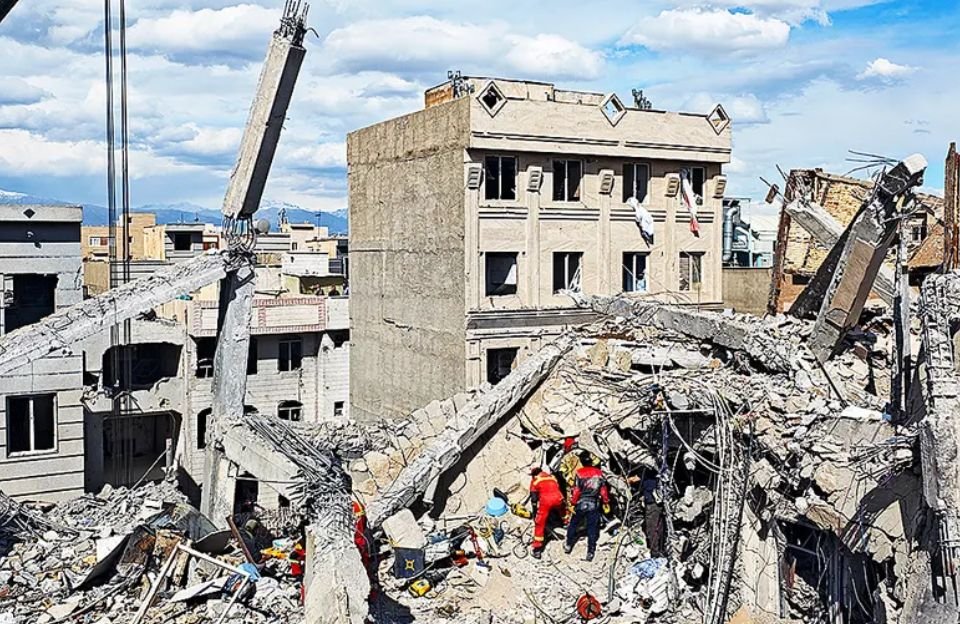
The airstrike that killed Ali Khamenei reportedly claimed devastating casualties within the leader’s family. Apparently, some members of the leader’s family died in the airstrike, including the leader’s daughter, grandchild, daughter-in-law, and son-in-law.
A few days after the airstrike that killed the former Iranian leader, the former leader’s wife reportedly died from the injuries she sustained from the airstrike.
What His Rise Means for Iran
However, Mojtaba Khamenei’s appointment is seen as a move of continuity in Iran’s political structure, not one of reforms. Many analysts believe that the Islamic Revolutionary Guard Corps has become even stronger after the transition in Iran’s political leadership.
Though Mojtaba Khamenei has enough experience running his father’s office, he has never headed a large administrative body in Iran.
This move, analysts say, is a clear sign of Iran’s commitment to its current policies, despite the pressure being mounted by its enemies, both militarily and politically.
However, at home, Iran is facing serious challenges, including economic difficulties, energy shortages, unemployment, as well as water crises.
A Symbolic Moment for the Announcement
The leadership announcement was made during Laylat al-Qadr, one of the holiest nights in the Muslim fasting month of Ramadan.
For Ali ibn Abi Talib, an important figure in Shiite Islam whose assassination is observed during this time, the significance was religious in nature for the clerical leadership in Iran.
The supporters in Tehran greeted the news with chants that hailed the renewal of leadership in Iran.